

Buying a Used Car: The Essentials
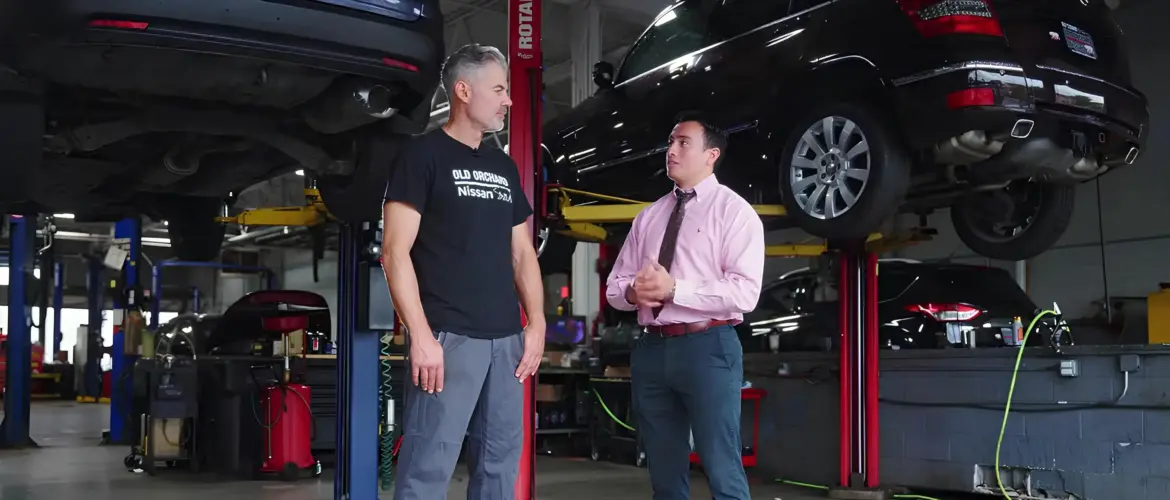
Buying used can save you thousands, but the cheapest car on the lot can turn into the most expensive one you ever own. Knowing what to look for when buying a used car comes down to one question: what don’t you know about this car yet? To find out what everyday buyers miss, we asked Dejan (Dan for short), a technician at Old Orchard Nissan in Skokie for more than 30 years, to inspect five real cars in our service bay.
5 Red Flags That Mean Walk Away
None of these rules a car out on its own. Each one means you need answers before you sign. If the answers don’t come, keep shopping.
1. Signs of Hidden Accident Repair
A car can look spotless from ten feet away and tell a different story up close. The first car Dejan inspected was a nearly new compact SUV. Up close, several panels had been repainted and the tires didn’t match. To him, that pattern suggests a car that may have come through an auction and been cleaned up to sell.
How to check: Do the body-and-paint walkaround from our checklist below, then compare what you see with the vehicle history report.
Walk away when: the seller can’t explain body work that isn’t on the report, or the report shows a major accident.
▶ Watch Dejan inspect the first car (0:47)
2. A Trail of Neglect
“An old car can actually still be very well-maintained, just an old model. A neglected car, you have things to worry about, whether it doesn’t have good brakes on it, bad tires, bad transmission.”
Dejan, Technician
How a car was cared for matters more than its age. Dejan looks at the brakes and tires first on any used car. They show quickly whether someone kept up with the basics, and he wants to know a car is safe before he road-tests it.

How to check: Ask for service records. A car well past its scheduled maintenance with nothing on paper is a warning sign; the fluid and tire checks in our checklist tell you the rest.
Walk away when: there are no records, and the brakes, tires and fluids all point the same way.
▶ Old car vs. neglected car (1:34)
3. Leaks and Signs of Past Engine Work
On an older Honda CR-V, Dejan found oil on the underside of the engine, coming from higher up. The engine’s front cover had already been removed, which suggests someone had tried to fix the leak, and that’s a costly job. Seals wear out with age, so a leak alone doesn’t mean the car was abused. What a leak leads to is the problem: an engine that runs low on oil wears faster and eventually fails.

How to check: Look at the ground where the car was parked. Under the hood, look for wet or grimy areas and fresh sealant around engine covers. After the test drive, look under the car again for fresh drips and sniff for burning oil.
Walk away when: the leak is active and the seller doesn’t know where it’s coming from.
▶ See the leak Dejan found (4:22)
4. Engine Noises That Signal an Expensive Repair
Some noises are cheap to fix. Others are a four-figure warning. A 2012 Mercedes-Benz GLK came into our service lane with a rattle from behind the timing chain cover. Dejan says this usually comes from a lubrication problem or a worn chain guide that lets the chain stretch and slap. Parts and labor on a luxury car are expensive, and he expects a repair like this to run into the thousands.
That’s the luxury trap. Before you buy an older premium car, ask a service advisor what its common repairs cost.
How to check: Ask to start the engine cold, after it has sat for hours. A rattle at startup that fades as the engine warms up is a classic timing-chain symptom. Be wary of a car that’s already warm when you arrive.
Walk away when: the noise is there on a cold start and the price doesn’t leave room for the repair.
▶ Dejan on the GLK’s timing chain (3:26)
5. Modifications Nobody Can Explain
A modified car isn’t automatically a bad buy. The 2025 Toyota GR Corolla Dejan looked at was clean inside and out, and Toyota’s reputation for reliability works in its favor. With a modified car, the risk is the quality of the work. A badly done suspension job can make a car ride harshly and fill it with noises, and an engine tune can push parts past what the factory designed them for. In Illinois, “unauthorized modifications” are also one of the defenses a dealer can raise against a claim under the state’s used-car warranty (see the FAQ below).
How to check: Ask what was changed, who did the work, whether there are receipts, and whether the original parts come with the car.
Walk away when: major suspension or engine work comes with no paperwork at all.
Check the Paper Trail Before You Drive
Ten minutes with the VIN can rule a car out before you spend an afternoon on it.
- Vehicle history report (Carfax or AutoCheck): reported accidents, title history, owners and odometer readings. It only shows what was reported, though. Body work paid for in cash never appears, which is why the paint check still matters.
- NICB VINCheck: free. It shows whether insurers have reported the car stolen and not recovered, or reported it as salvage or flood-damaged.
- NMVTIS report (from an approved provider listed on vehiclehistory.gov): state title brands, the latest odometer reading, and whether the car was reported totaled or sent to a salvage yard.
- NHTSA recall lookup at nhtsa.gov/recalls: free, by VIN. Open safety recalls are repaired free at a dealer for that brand, so an open recall isn’t a deal-breaker, but get it fixed.
- The title itself: the seller’s name should match, and the VIN on the title should match the dashboard and the driver’s door jamb. In Illinois, a car declared salvage gets a salvage certificate instead of a regular title, and titles can carry a “rebuilt” or “flood” brand.
- The Buyers Guide on any dealer’s used car: it says whether the car is sold as-is or with a warranty, and what it says overrides anything contrary in the sales contract.
Shopping a Nissan? Our Nissan VIN decoder guide shows what each character in the VIN means.
Used Car Inspection Checklist: Your Walkaround
Do this in daylight, ideally on a dry day. Bring a flashlight, a paper towel and a penny.
| Area | What to check | Red flag |
|---|---|---|
| Body and paint | Color and texture match panel to panel; even gaps; no overspray on seals | Repaint or misaligned panels the history report doesn’t explain |
| Underneath | Frame, brake lines and rocker panels; years of salted Chicago roads show up here | Flaking or rusted-through metal, not just surface rust |
| Tires | Same brand and size on each axle; tread depth (penny test); DOT date code, where the last four digits are the week and year | Mismatched tires; tread at 2/32 inch; uneven wear, which points to alignment or suspension trouble |
| Under the hood | Oil level and color on the dipstick, coolant, belts and hoses | Low, black or gritty oil; milky oil; cracked belts or hoses |
| Interior | Smell, carpets, upholstery, wear against the odometer | Musty odor, water stains, silt under the mats, mismatched upholstery (all flood signs); a worn-out wheel and pedals on a low-mile car |
| Electronics | Every window, lock, screen, A/C and heat; warning lights at startup | A light that stays on, or one that never comes on at all |
What to Look for on the Test Drive
“The one thing that most buyers never usually check is whether the transmission is properly shifting when they’re driving down the road.”
Dejan, Technician
Give yourself at least 30 minutes, and drive the roads you’d actually drive: stop-and-go on Golf Road, then highway speed on the Edens.
- Transmission: shifts should be smooth. Watch for revs climbing without the car speeding up, harsh clunks, or a delay going into Drive or Reverse. A CVT should feel seamless, so a shudder or whine is a concern. If the records show no fluid service, ask about a transmission fluid change.
- Brakes: the car should stop straight, without a pulsing pedal, grinding or squealing.
- Steering and suspension: watch for a pull to one side, vibration at highway speed, clunks over potholes, or knocks when you turn the wheel all the way in a parking lot.
- Engine: watch for hesitation. Blue exhaust smoke means burning oil; white, sweet-smelling smoke means burning coolant.
Get a Mechanic’s Eyes Under the Car
“This is why we put cars on a lift.”
Dejan, Technician
Leaks, frame rust, accident repairs and worn suspension parts are hard to spot in a driveway. On a lift, a technician can find them in minutes, and a scan tool can show whether trouble codes were recently cleared. Even the federal Buyers Guide tells shoppers to ask for an independent mechanic’s inspection before they buy.
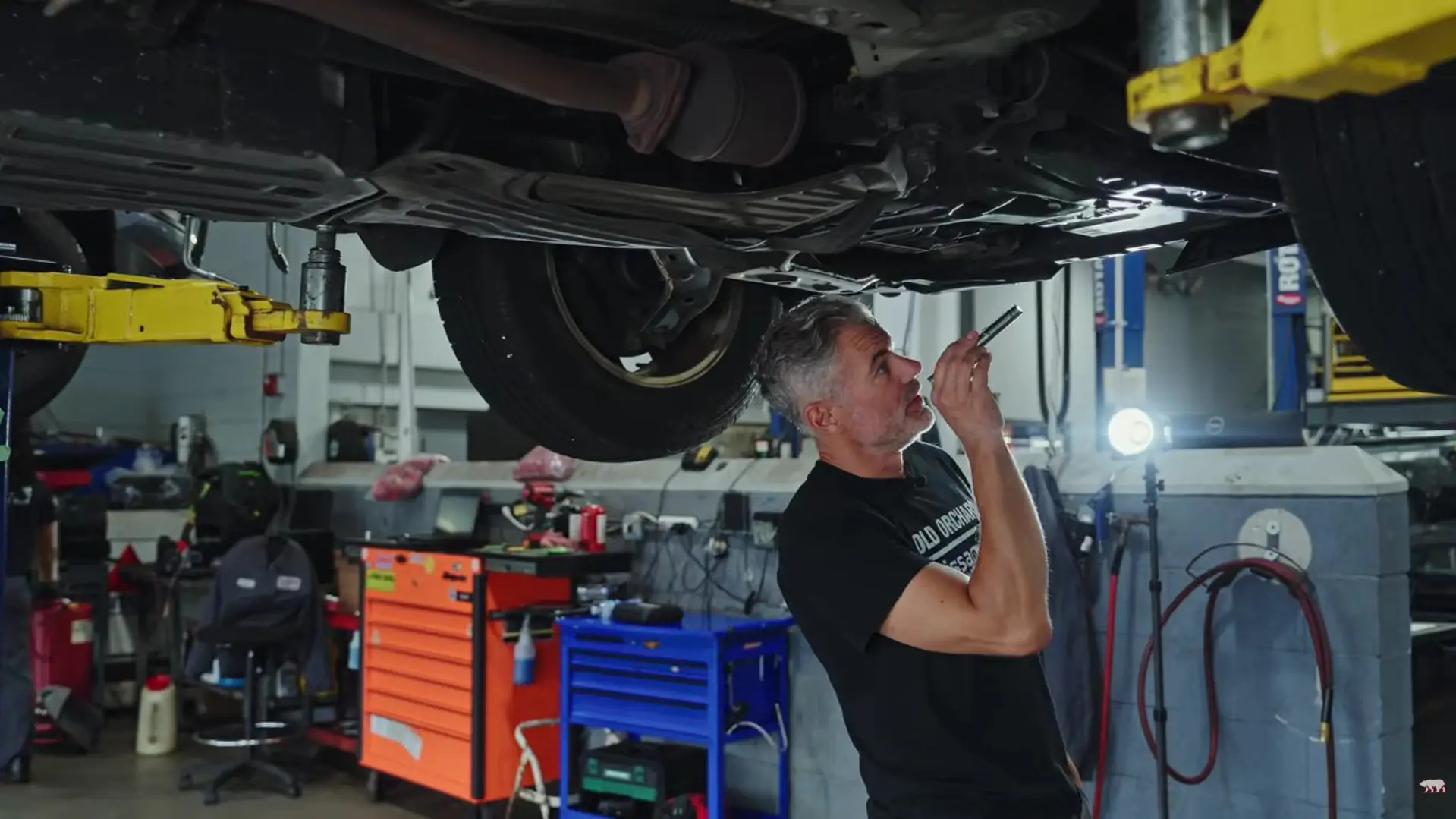
From a dealer, ask to see the car’s inspection report. Buying from a private seller or another lot? We service all makes and models — call our service team at (877) 351-5539 to ask about an inspection before you buy.
Walk away when: the seller won’t allow an inspection. A seller with nothing to hide welcomes one.
Buying Used Without the Guesswork
We asked Dejan what the scariest used car is.
“Probably the car that you know nothing about.”
Dejan, Technician
When you buy used from us, you start with answers.
- 156-point inspection on every pre-owned vehicle in our used inventory.
- No-obligation extended test drives, so you can do everything in section 05 properly. Ask your product specialist for details.
- Trading in? Get your trade-in value online first.
- Financing: our in-house financing team works with a network of lenders, including options for bad or no credit, subject to credit approval.
- After the sale: we service all makes and models.
- Nissan Dealer of the Year (2019, 2023, 2024).
Still narrowing it down? See our best used SUVs under $30,000, and how the visit itself works in how to buy a car from a dealership.
Frequently Asked Questions
How many miles is too many for a used car?
Should I buy a car with a rebuilt title?
Does Illinois have a lemon law for used cars?
How much does a pre-purchase inspection cost?
Is a certified pre-owned car better than a regular used car?
Shop Used Cars in Skokie
Know what you’re looking for? If it isn’t on our lot, ask us. We also offer free delivery within 10 miles.


