

Car Battery Life at a Glance
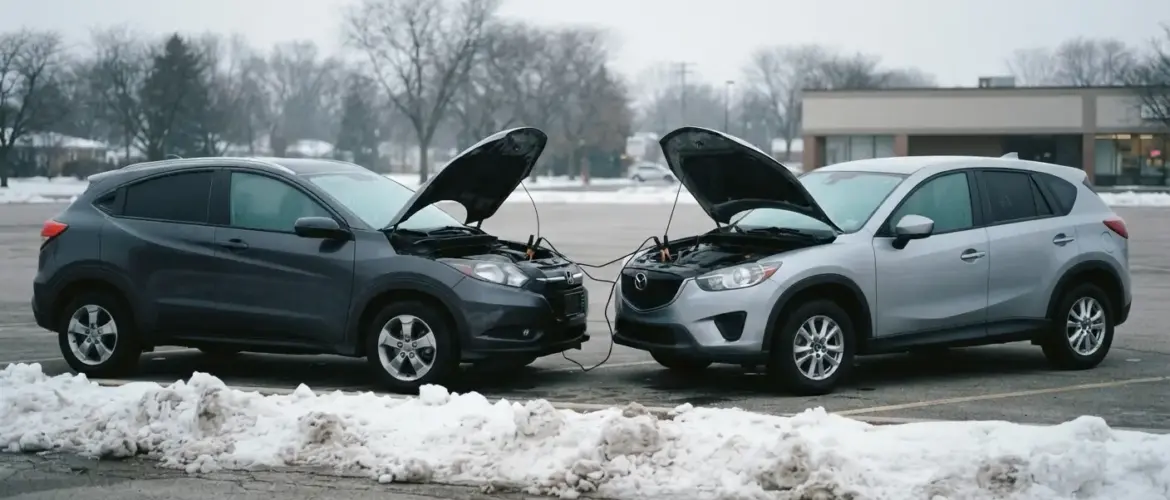
A car battery rarely gives much notice. It starts the car every morning for years, and then one January day it doesn’t. So how long does a car battery last, what wears it out, and how do you tell when yours is close to the end before it leaves you stuck in a parking lot in Skokie?
How Long a Car Battery Usually Lasts
AAA puts the typical life of a car battery at three to five years. Where yours falls in that range depends mostly on climate, how you drive, and how well the battery is cared for. In cooler northern climates, a battery may last five years or longer; in hot southern ones, about three years is typical.
That range is an average, not a promise. Two identical batteries can age very differently in a car that commutes on the Edens every day and one that sits in a Wilmette garage most of the week.
Why Batteries Fail in a Chicago January
Cold gets the blame because that’s when batteries quit, and the numbers are real. According to AAA, a battery loses about 35% of its strength at 32°F and about 60% at 0°F, while thick, cold oil makes the engine harder to crank. O’Hare dropped to −10°F in January 2024 and −23°F during the January 2019 polar vortex, which is far colder than that.
But cold usually isn’t what wears a battery out. AAA says summer heat does the most damage: it speeds up the chemical reactions inside the battery, and under-hood temperatures climb well above the air outside. A Chicago battery lives through both extremes every year. It loses capacity during a hot July, then runs out of margin on the first subzero morning.
What Shortens Battery Life, and How to Help It Last
- Short trips. Starting the engine takes a big draw from the battery, and a short hop doesn’t give the alternator time to put it back.
- Sitting unused. Clocks, alarms, and onboard electronics keep drawing power from a parked car. AAA says a battery can go only a month or two without driving, and it recommends driving at least once a week for 30 minutes.
- Running it flat. Deep discharges, like leaving the lights on overnight, are hard on a lead-acid battery. Switch off lights and accessories before you shut the car off.
- Vibration. A loose or missing hold-down bracket lets the battery shake, and AAA notes that this alone can significantly shorten battery life.
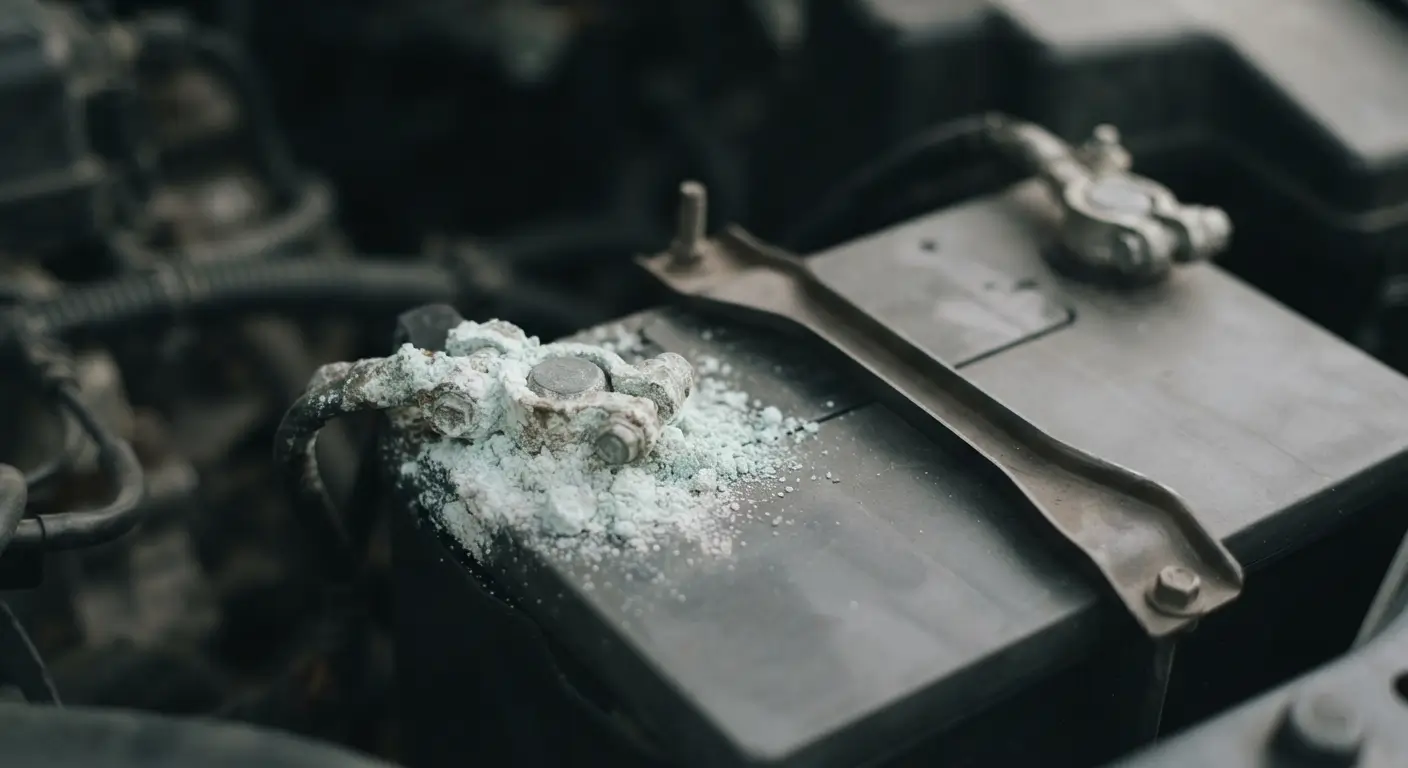
- Corrosion and charging problems. Crusty terminals add resistance, and an alternator that over- or undercharges ages a battery faster. Keep the terminals clean and tight.
Signs Your Car Battery Is Dying
- The engine cranks slowly, or you hear clicking when you press START or turn the key
- The battery or charging warning light comes on
- Headlights look dim, especially at idle
- Interior lights flicker, or the infotainment screen resets at startup
- The battery case is swollen, cracked, or leaking
- You’ve needed a jump more than once this season
Not every one of these points to the battery. A failing alternator can drain a good battery, and a worn starter can sound like a weak one. That’s why a proper test checks the whole starting and charging system, not just the battery itself. And some batteries give no warning at all, which is why age matters as much as symptoms.
How to Check Your Battery
Find its age. Most batteries have a date sticker or stamped code on the case showing when they were made or installed. Formats vary by brand, so if you can’t read it, check your service records or ask us.
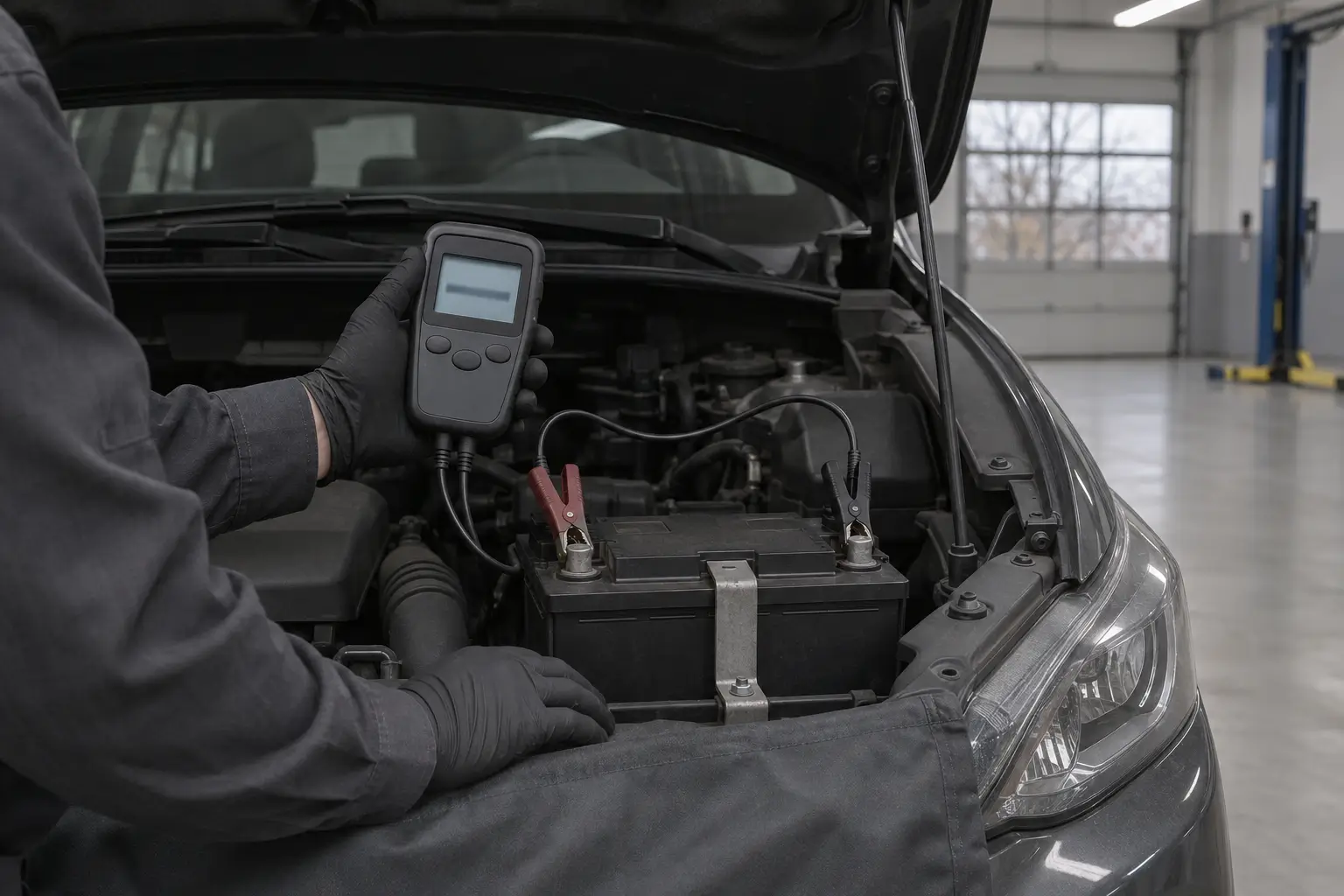
Read the voltage. With the engine off and the car rested for at least an hour, a multimeter across the terminals gives you the battery’s state of charge. A reading around 12.6 to 12.7 volts means it’s fully charged; about 12.4 volts is roughly 75%; 12.0 volts is about 25%. A low reading tells you the battery needs charging. It doesn’t tell you whether the battery is healthy.
Get a load test. Only a test under load shows how well the battery holds up when it actually has to start the engine. A shop test takes a few minutes. Our battery service team can test yours, whatever you drive.
| Your battery | What to do |
|---|---|
| Under 3 years old, starts normally | Have the terminals and hold-down checked at oil changes |
| 3 years or older | Get a load test every year, as AAA recommends, ideally in the fall |
| Slow cranking or a warning light, at any age | Test the battery and the charging system now |
| Fails a load test, or you’ve needed repeated jumps | Plan the replacement before the next cold snap |
When It’s Time to Replace It
When you replace a battery, match what the car was built with:
- The same group size, so the battery fits the tray and the hold-down.
- At least the cold-cranking amps (CCA) the manufacturer specifies. CCA measures how much starting power the battery delivers in the cold.
- The same battery type. Many newer cars with engine start-stop use an AGM or EFB battery, and AAA recommends sticking with the type the car came with.
On some newer vehicles, a replacement battery also needs to be registered with the car’s battery management system so it charges correctly. Ask your service advisor whether yours does.
For a Nissan, our parts department carries Genuine Nissan replacement batteries designed to meet the vehicle’s original specifications and backed by a limited warranty.
Recycle the old one. Illinois law requires anyone selling lead-acid car batteries at retail to accept used ones for recycling when you buy a new one, and car batteries can’t go in household trash or curbside recycling bins.
Hybrids and EVs Still Have a 12-Volt Battery
A hybrid or an EV, including the Nissan LEAF, still uses a conventional 12-volt battery to power up the car’s computers, locks, lights, and accessories. If it goes flat, the car may not turn on, even with a fully charged high-voltage pack. It ages the same way and fails the same way. The large high-voltage battery is a separate component with its own warranty and lifespan, and it isn’t what this article is about.
Why Old Orchard Nissan
Old Orchard Nissan is Nissan Dealer of the Year (2019, 2023, 2024). Here’s how our service team can help:
- Express Service available for many services — no appointment needed; call to confirm availability for battery testing.
- We service all makes and models, so the battery check isn’t limited to Nissans.
Frequently Asked Questions
Can a car battery last 10 years?
Does a jump-start damage the battery?
How much does a new car battery cost?
Is my Nissan’s battery covered by warranty?
Should I disconnect the battery if I’m leaving the car for weeks?
Get Your Battery Tested Before Winter
Call us or stop by 5240 Golf Rd in Skokie. We’ll test the battery and charging system on any make or model, and if it’s time for a new one, we’ll help you match the right battery to your car.


